Gopher Control FAQ
Oregon's mole, gopher & farm rat specialists. Serving Oregon City, Portland, Lake Oswego & surrounding areas.
Call or text: (971) 282-5065
mrhillmoles@gmail.com
-
The clearest sign of a gopher is a crescent- or fan-shaped mound of loose soil on the surface of your yard, typically larger and flatter than a mole mound. Unlike moles, gophers plug the entrance hole to their tunnel system, so you'll often see a dirt fan with a subtle plugged opening at one edge. Gophers also leave what's called a "lateral" — a secondary mound pushed out to the side while the animal clears debris from the main tunnel. If you're garden beds are being eaten from below with no visible animal, a gopher is likely working just under the surface. A quick call or photo to Mr. Hill at (971) 282-5065 can confirm the identification before any trapping begins.
-
Mole damage is most visible as raised surface ridges — winding tunnels just under the grass — and symmetrical, volcano-shaped mounds. Gopher mounds, by contrast, are crescent-shaped and fan out to one side, and gophers don't typically leave those surface ridges since they work deeper. The most telling difference, though, is what's being destroyed: moles eat earthworms and grubs and don't damage plant roots directly, while gophers eat roots, bulbs, and vegetation, meaning you'll find plants wilting, dying, or literally being pulled underground. A rose bush in Lake Oswego that suddenly droops and comes out of the ground in one tug — roots stripped clean — is textbook gopher damage, not mole. Both animals require professional trapping for reliable removal, but knowing which one you have determines the right trap setup.
-
Gophers pose a genuine safety risk on horse properties and pastures, primarily through the structural hazard of their tunnel systems. A horse stepping into a collapsed gopher tunnel or mound can suffer a serious leg injury, and on properties with multiple horses this risk compounds quickly as burrow networks expand. Gophers also compete directly with horses and livestock for forage by destroying pasture grass roots from below, reducing grazing capacity acre by acre. Property owners in Yamhill County, Wilsonville, and the broader Willamette Valley agricultural areas frequently contact Mr. Hill specifically because of the liability and injury risk gophers create on horse properties. Professional trapping is far safer for livestock than any poison-based approach, since there's no risk of secondary ingestion.
-
A single pocket gopher can destroy dozens of plants in a single season by eating their roots from below, and on agricultural land the economic impact scales quickly. A gopher working through a vegetable garden in Beaverton or Tigard can wipe out an entire row of carrots, beets, or potatoes without ever appearing above ground — you won't know until the plants collapse. On farms and larger properties, gophers damage irrigation lines, undermine raised beds, and reduce soil stability, often creating drainage problems that outlast the animals themselves. In Yamhill County vineyards and Willamette Valley farms, gopher damage to root systems and drip-irrigation infrastructure can run into thousands of dollars per season if left unaddressed. Early professional intervention is almost always more cost-effective than repairing the cumulative damage.
-
Like moles, pocket gophers are active in Oregon throughout the year — there is no defined off-season. Activity tends to peak in spring and early fall when soil moisture is high and plant roots are actively growing, giving gophers the most accessible food supply. During the hot, dry Oregon summers, gophers may dig deeper to stay near moisture, which can temporarily reduce visible mounding at the surface. In the Willamette Valley, the mild, wet winters keep gophers active even in December and January, which surprises many property owners who assume winter brings relief. Because of this year-round activity, starting removal as soon as gopher signs appear is always the right call.
-
No — pocket gophers do not hibernate and remain active year-round in Oregon. The Willamette Valley's moderate climate means the ground rarely freezes to a depth that would significantly disrupt gopher activity, so there's no predictable quiet period. Gophers do slow their surface mounding slightly when the ground is very dry or very cold, but they continue tunneling and feeding below the surface throughout those periods. Homeowners and farmers in Oregon City, West Linn, and Clackamas who wait for a "slow season" to address a gopher problem often find the tunnel network has expanded considerably by the time they act. Year-round professional monitoring through Mr. Hill's monthly maintenance plan is the most effective approach for properties with recurring pressure.
-
Vibration stakes, ultrasonic devices, and other repeller products are widely sold for gopher control but consistently fail to deliver lasting results. Gophers are well adapted to living in soil that naturally carries vibration from foot traffic, farming equipment, and weather, so they habituate quickly to artificial devices. The clay-heavy soils throughout much of the Willamette Valley also absorb and dampen vibration, further limiting the range and effect of these products. Oregon homeowners in Portland and Hillsboro who have tried vibration stakes report at most a temporary shift in where the gopher mounds appear — not the elimination of the animal. Professional trapping is the only approach with a reliable, verifiable result.
-
Gopher poison products — including grain-based baits containing zinc phosphide or strychnine — carry serious secondary poisoning risks for dogs, cats, raptors, and other wildlife that may consume a poisoned gopher or encounter the bait directly. On horse properties, the risk is compounded because horses may inadvertently ingest bait that works its way to the surface, and a horse's body weight does not make them immune to these toxins. Many of these products are also restricted-use pesticides in Oregon and require licensing to apply legally. Mr. Hill uses only professional scissor traps and snap traps — no poisons of any kind — which means there is zero risk of secondary toxicity to your horses, dogs, cats, or the local wildlife that shares your property. This is especially important for clients in agricultural areas of Yamhill County, Newberg, and McMinnville.
-
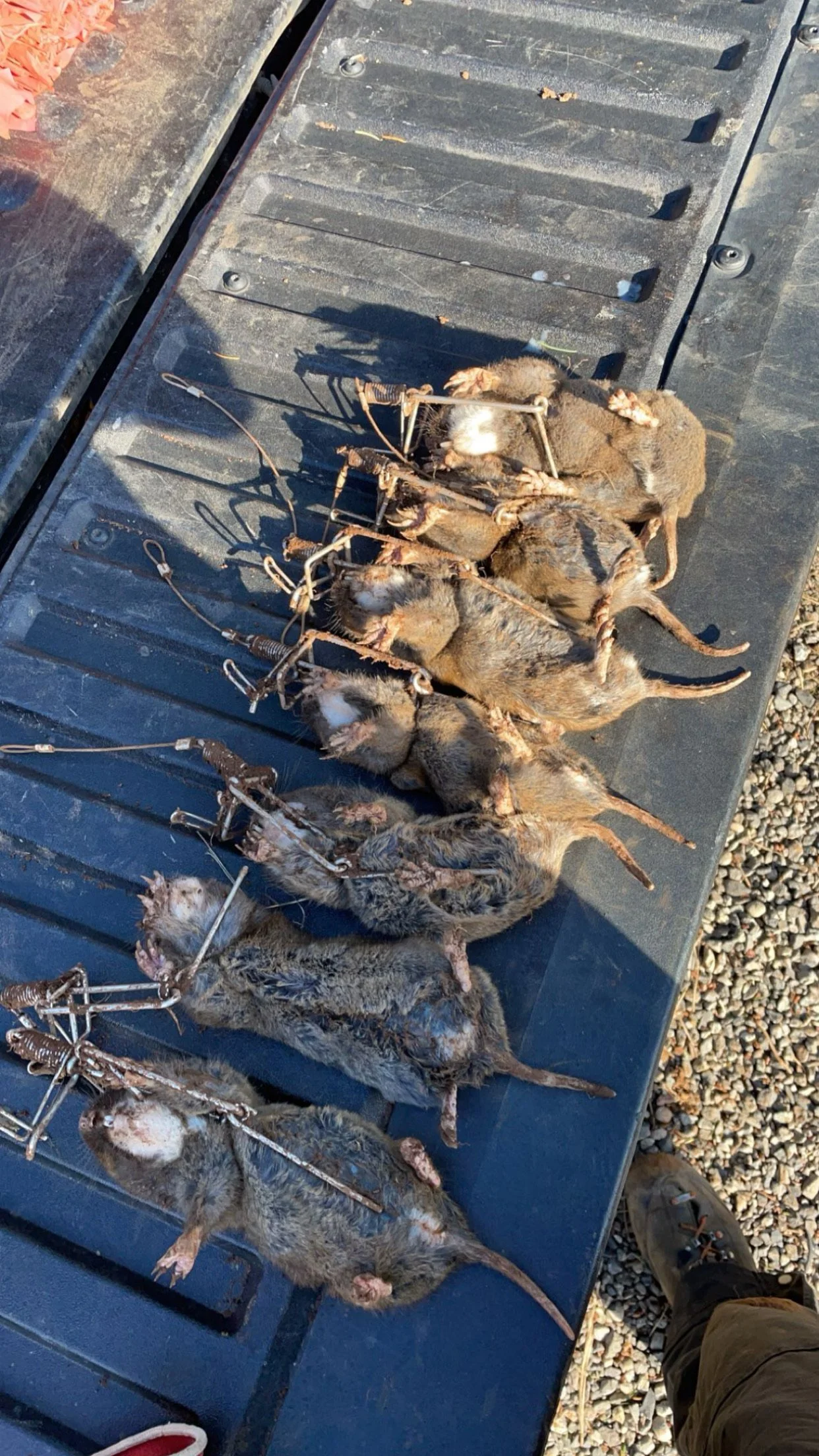
Most residential gopher situations are resolved within two to four weeks following trap installation. Cobi begins with a $200 setup visit to read the burrow system, identify active tunnels, and install traps in the most productive locations. Weekly trap checks follow, with photo updates sent directly to you so you can see what's been caught and where. Because gophers are typically solitary animals that defend territory, removing one animal often solves the immediate problem, though new gophers from neighboring properties can move in over time. Larger properties — farms in Wilsonville, horse properties in Yamhill County — may have multiple active animals and may require extended trapping to fully address the population.
-
Mr. Hill's gopher removal pricing works on a per-catch model that keeps things fair and transparent. There is a one-time $200 setup and installation fee, followed by a $45 charge per gopher caught — you don't pay that $45 until an animal is actually removed. For properties with ongoing pressure, monthly maintenance plans start at $79 per month and provide regular trap checks to catch any new arrivals before they establish a foothold. Given the damage a single gopher can do to a garden, lawn, or pasture, most clients find the cost modest compared to the repair bills they were facing.
-
Trapped gophers are permanently removed, but new gophers from surrounding areas can move into the vacated territory, especially on properties adjacent to fields, open land, or other unmaintained areas. In the Willamette Valley, where agricultural land and residential neighborhoods often sit side by side — as in Tualatin, Wilsonville, and Newberg — reinvasion pressure can be significant. The best defense against reinvasion is a monthly monitoring plan, which allows Mr. Hill to detect and remove a new animal before it has a chance to establish a tunnel network and cause damage. Think of it as protecting an investment: trapping solves the current problem, and ongoing service ensures it stays solved.
-
Pocket gophers are herbivores that feed on plant roots, bulbs, tubers, and any vegetation they can reach from underground — including the roots of trees, shrubs, ornamental plantings, and vegetables. They are also well documented to gnaw on plastic irrigation tubing and drip lines, not because they eat the plastic but because it's in their path and they will chew through obstacles while tunneling. In Portland backyards, Beaverton gardens, and Salem farm fields, gopher damage to drip irrigation systems is a common and expensive secondary consequence of an untreated gopher problem. A single gopher can puncture multiple lines in one tunnel-expansion session, leading to water loss, dry spots, and costly repairs. Early removal is by far the cheapest way to protect your irrigation investment.
-
DIY gopher trapping is legal in Oregon and can work, but requires a solid understanding of gopher behavior and tunnel anatomy to be effective. The key is locating the main tunnel — not a lateral — and setting the trap at the correct depth and orientation, which takes practice to learn consistently. Hardware store traps vary widely in quality, and an improperly set trap often results in a "trap-shy" gopher that learns to avoid that section of the tunnel. Many property owners in Oregon City and Happy Valley attempt DIY trapping for weeks before calling Mr. Hill, and find that the per-catch professional pricing with a 14-day guarantee is actually less costly and far less frustrating than repeated DIY failures. Having a professional read the burrow system correctly the first time makes a significant difference in results.
-
The Willamette Valley offers gophers an almost ideal habitat: deep, workable soil, abundant plant root systems year-round, a mild climate with no sustained freezes, and a rich agricultural landscape that has supported large gopher populations for generations. The valley's characteristic loam and clay soils are easy for gophers to burrow through, and the consistent moisture from Oregon's wet winters keeps the ground soft and accessible. Oregon's strong farming culture — orchards, vineyards, nurseries, market gardens — provides an enormous food source that sustains dense gopher populations across Yamhill County, the northern valley, and into the Salem area. As suburban development continues to push into agricultural land, gophers that formerly lived in open fields are increasingly finding their way into residential yards in Tigard, Tualatin, and Hillsboro.
-
Start by asking what method the company uses — any reputable specialist will answer "traps" without hesitation, because trapping is the only consistently effective approach. Be cautious of companies that lead with poison bait or repeller programs, particularly on horse properties or farms where secondary exposure is a real concern. Ask about their pricing model: per-catch pricing, like Mr. Hill's, means you only pay when results are delivered, which is a far stronger alignment of incentives than open-ended monthly contracts. A 14-day guarantee with a refund option shows genuine confidence in the method. Finally, choose someone with real local experience — a specialist who knows the Willamette Valley's soil conditions and the behavior of Oregon's Botta's pocket gopher will get better results than a generalist pest company treating gophers as a side service.
Oregon's Trusted Mole Control Specialists
If moles are tearing up your lawn in Portland, Oregon City, Lake Oswego, West Linn, Beaverton, or anywhere in the Willamette Valley, Mr. Hill is ready to help. With professional trapping, a per-catch pricing model, and a 14-day guarantee, there's no risk in making the call. CALL 971-282-5065